
UCSF Scientist Discovers a Genius Way to Starve Cancer
UCSF School of Pharmacy scientist Nadav Ahituv, PhD, is developing a promising new approach to treating cancer: starve tumors of the nutrients they need to grow.
UCSF School of Pharmacy scientist Nadav Ahituv, PhD, is developing a promising new approach to treating cancer: starve tumors of the nutrients they need to grow.

The proteins that run our bodies have been shaped by 4 billion years of messy trial and error. Now, using AI, scientists William DeGrado, PhD, James Fraser, PhD, and Tanja Kortemme, PhD, are designing efficient and creative new versions of these molecules to intervene when our natural processes fall short.
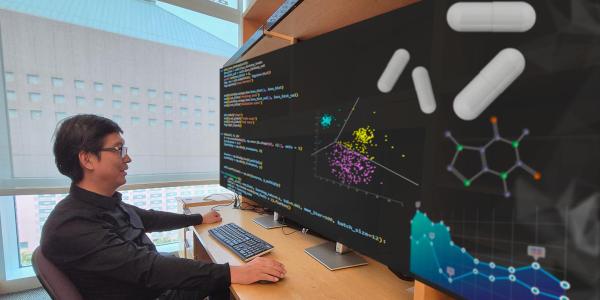
Working in close collaboration with OpenAI colleagues, Liang Zhao, PhD, MAS, MBA, and his team at the UCSF School of Pharmacy are developing a benchmark to evaluate how well AI tools can perform scientific tasks. Included among the tools is GPT-Rosalind, a domain-specific large language model designed for life sciences such as genomics and drug discovery.
A team of UCSF School of Pharmacy researchers led by professor James Fraser has been selected for a new U.S. Department of Energy initiative aimed at harnessing artificial intelligence to accelerate scientific discovery.

The new degree program is designed to prepare professionals to lead effective regulatory, research and development solutions that allow promising new medications and health technologies to reach patients safely.
Tony Capra, PhD, first came to UCSF as a postdoctoral fellow, where he learned to apply computational methods to genetics and human evolution. Now a professor in the UCSF School of Pharmacy's Department of Bioengineering and Therapeutic Sciences, Capra develops computational and AI methods to better understand genetic variation, rare disease, and the biology that makes us human.
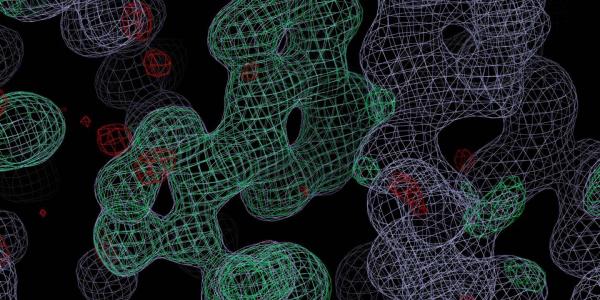
UC San Francisco and UC Berkeley have launched a joint program to develop the frontier of AI and biomedicine to accelerate advances in clinical care. James Fraser, PhD, a professor in the UCSF School of Pharmacy's Department of Bioengineering and Therapeutic Sciences, is among the program's leaders.

Researchers at the UCSF Quantitative Biosciences Institute, Icahn School of Medicine at Mount Sinai, Institut Pasteur, and Fred Hutchinson Cancer Center, report that a single amino-acid change alters how a coronavirus protein interacts with the human and bat immune systems, shifting the body's response to infection.
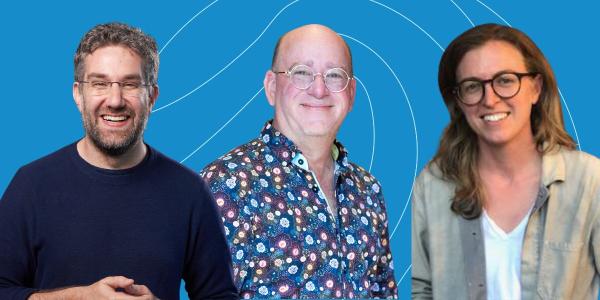
James Fraser, PhD, Brian Shoichet, PhD, and Balyn Zaro, PhD, have all been selected to join the Collaborative Research Network (CRN), an international consortium supported by Aligning Science Across Parkinson's (ASAP) in partnership with The Michael J. Fox Foundation for Parkinson's Research that aims to better understand Parkinson's disease and speed the development of future treatments.
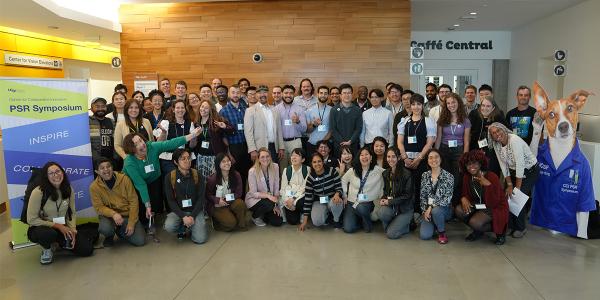
Postdoctoral scholars, specialists, and researchers (PSRs) from across the UCSF School of Pharmacy gathered at the Wayne and Gladys Valley Center for Vision on the Mission Bay campus on June 24, 2026, for the third annual PSR Symposium, an inspiring day of scientific exchange, career development, and community building hosted by the Center for Collaborative Innovation (CCI).

Leslie Benet, PhD ’65, professor emeritus in the UCSF School of Pharmacy Department of Bioengineering and Therapeutic Sciences, spent 61 years reshaping how medicines are dosed worldwide and mentoring budding scholars. Yet in a career marked by nearly every major award in pharmaceutical science, he's most excited about what he's doing today.

A UCSF research team led by Department of Bioengineering and Therapeutic Sciences Chair and Professor James Fraser, PhD and Department of Pharmaceutical Chemistry Professor William DeGrado, PhD, has pioneered a breakthrough approach to designing proteins with targeted functions, which could lead to simpler ways to improve enzymes and medications, among other uses, according to a new study published in Nature Chemistry.

Seven forward-thinking projects poised to advance the mission of the UCSF School of Pharmacy have been selected to receive support through the 2026 Mary Anne Koda-Kimble Seed Award for Innovation.

Rada Savic, PhD, has been awarded a $30.6M grant over five years from the National Institutes of Health (NIH) and the National Institute of Allergy and Infectious Diseases (NIAID) for a cooperative agreement establishing a global consortium of tuberculosis (TB) preclinical and clinical experts to research the most effective treatment and testing options.

Su Guo, PhD, professor in the Department of Bioengineering and Therapeutic Sciences, is seeking to expand our understanding of the brain to help treat neuropsychiatric disorders.

From designing smarter tuberculosis treatments to engineering new therapeutic proteins and decoding the genetic basis of disease, research at the UCSF School of Pharmacy is improving patient care and advancing medicine worldwide.

Department of Bioengineering and Therapeutic Sciences Professor Shuvo Roy, PhD, is advancing The Kidney Project toward clinical readiness while translating its filtration technology into new therapies that could transform treatment for kidney failure, blood safety, neonatal care, and diabetes.

More than 100 current and former graduate students gathered on Oct. 3 for the School of Pharmacy’s first “Bridging Past and Future: Highlighting UCSF Graduate Students and Alumni” symposium.

Population geneticist Ryan Hernandez, PhD, a professor in the Department of Bioengineering and Therapeutic Sciences, is recognized for revealing how humanity’s shared continuum shapes health outcomes and for expanding opportunities for aspiring scientists.
Vice Dean of Research Tanja Kortemme, PhD, and Department of Bioengineering and Therapeutic Sciences Assistant Professor Kyle Cromer, PhD, are among seven UCSF scientists recognized with prestigious NIH High-Risk, High-Reward Awards for 2025.
By dialing up a healthy gene, Department of Bioengineering and Therapeutic Sciences Professor Nadav Ahituv, PhD and a team of UCSF scientists stopped seizures in mice with a common mutation found in neurodevelopmental disorders like epilepsy and autism.
Fraser and his research team uses synchrotron X-rays to reveal enzyme targets and revive antibiotics that are losing effectiveness against resistant bacteria.
A new initiative led by the school's Quantitative Biosciences Institute will support mentorship and research capacity, platforms for knowledge exchange, and an international exchange program for promising early-career African scientists.