Researchers Leverage AI to Design New Generation of Enzymes
Researchers Leverage AI to Design New Generation of Enzymes
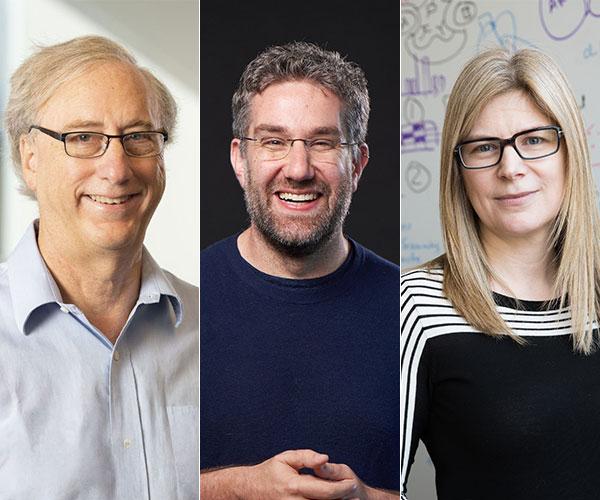
A team of UCSF School of Pharmacy researchers has been selected for a new U.S. Department of Energy initiative aimed at harnessing artificial intelligence to accelerate scientific discovery.
The project will design new enzymes to create useful biotechnology tools for manufacturing, clean energy, waste treatment and more.
“By combining advances in AI with detailed experimental measurements, we have an opportunity to make enzyme design more predictable and to develop new catalysts for challenges in biotechnology and energy,” said James Fraser, PhD, professor and chair of the Department of Bioengineering and Therapeutic Sciences and the project’s principal investigator.
Fraser is leading the project with co-investigators Tanja Kortemme, PhD, and William DeGrado, PhD, from the UCSF School of Pharmacy and Aina Cohen, PhD, from the SLAC National Accelerator Laboratory.
The project is among 278 selected through the Department of Energy’s Genesis Mission. The highly competitive process attracted more than 5,000 applications from around the country — the largest response to a funding opportunity in the department’s history.
Genesis Mission brings together researchers with the DOE’s national laboratories, advanced AI tools, and high-performance computing resources to rapidly design, test, and refine new approaches to accelerate breakthroughs in energy, discovery science, and national security.
Scientists have long sought to engineer programmable and adaptable enzymes that could provide alternative ways to manufacture chemicals, detoxify waste, and convert plant material and biomass into useful products.
The UCSF School of Pharmacy-led team will develop an approach called “structure-seeded enzyme design” that combines AI protein design with high-throughput experiments to make the process of creating these enzymes more predictable.
The team will first use AI to generate large numbers of stable protein structures or “scaffolds.” They will then use X-ray crystallography at SLAC to see how small molecules involved in chemical reactions fit inside those proteins.
The researchers plan to make its models, chemical libraries, experimental structures, screening results, and workflows available through the Genesis Mission infrastructure so other researchers in the initiative can build on the work.
If successful, the project could lay the foundation for designing useful enzymes faster and more predictably, while giving scientists greater control compared to conventional enzyme engineering.