Researchers Join Global Network to Accelerate Parkinson's Disease Discovery
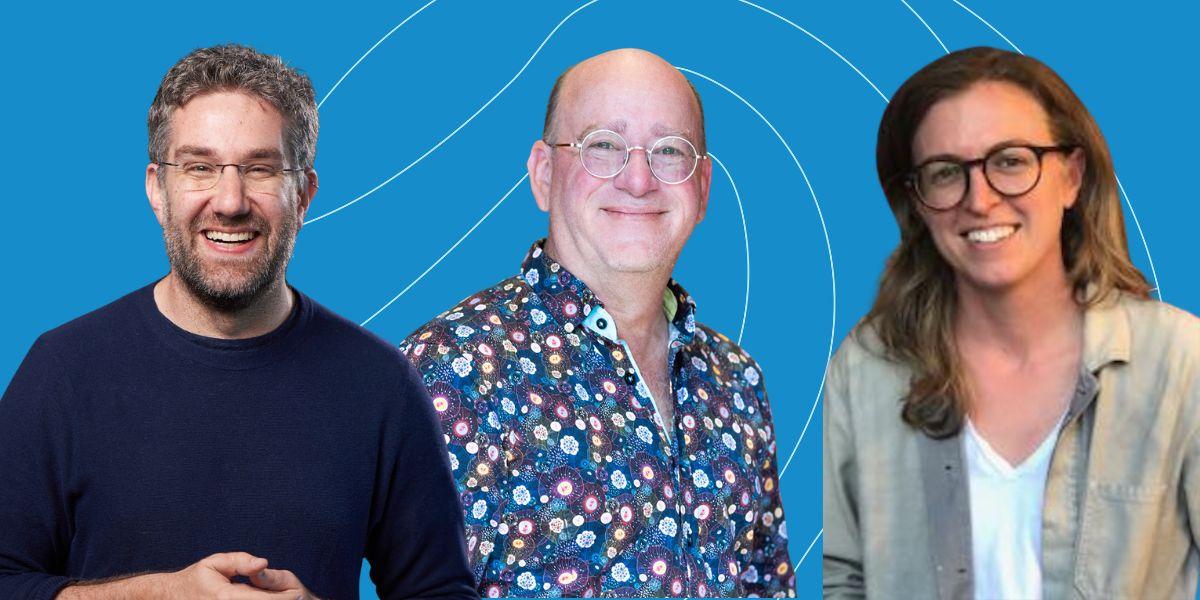
Three UCSF School of Pharmacy faculty members are joining a major international effort to better understand Parkinson's disease and speed the development of future treatments.
James Fraser, PhD, Brian Shoichet, PhD, and Balyn Zaro, PhD, have all been selected to join the Collaborative Research Network (CRN), an international consortium supported by Aligning Science Across Parkinson's (ASAP) in partnership with The Michael J. Fox Foundation for Parkinson's Research.
Their work will be part of the CRN Tool Generation theme, which brings together multidisciplinary teams to develop, validate, and openly distribute high-quality research tools — from laboratory models to molecular probes — that scientists around the world can use to study promising Parkinson's disease targets.
Parkinson's disease affects nearly 10 million people worldwide and remains one of the fastest-growing neurological disorders. Although researchers have identified many of the biological processes involved, important questions remain about why the disease progresses differently from one person to another.
Building better tools
The selection of Fraser, a professor in the Department of Bioengineering and Therapeutic Sciences, along with Shoichet and Zaro, professors in the Department of Pharmaceutical Chemistry, adds to UCSF's long-standing contributions to Parkinson's research, spanning basic biology, drug discovery, and translational science.
Over the next three years, the UCSF-led team will develop a new collection of probes and make them, along with supporting data and protocols, freely available to researchers worldwide, allowing laboratories everywhere to build on the team's discoveries without intellectual property barriers.
"Parkinson's disease is an incredibly complex disorder, and answering the biggest questions requires building tools to uncover new biology," Fraser said. "The Collaborative Research Network brings together scientists with different perspectives and technologies to address problems that are difficult to solve in isolation."
Complementary expertise
Over the last few decades, UCSF School of Pharmacy investigators have helped advance understanding of the molecular mechanisms that drive neurodegeneration, identify potential therapeutic targets, and develop new approaches for discovering medicines.
Shoichet, a leader in computational drug discovery, has pioneered methods that use computer modeling to identify promising drug candidates for a wide range of diseases, including neurodegenerative disorders.
Fraser studies the dynamic behavior of proteins, developing tools that reveal how they change shape and function inside cells. Those insights help researchers better understand the molecular events that contribute to disease.
Zaro's research explores the chemical biology of proteins and cellular signaling, with a focus on identifying previously hidden biological mechanisms that could offer new therapeutic opportunities.
"This initiative reflects a growing recognition that some of the most important scientific challenges can only be solved through collaboration," Zaro said. "By bringing together complementary expertise from around the world, we have an opportunity to make progress more quickly than any of us could alone."
Global collaboration
Together, the UCSF researchers will contribute specialized research tools to an international network of scientists working to better understand the biological diversity of Parkinson's disease and accelerate the development of future therapies. The expanded Collaborative Research Network includes researchers from institutions across North America, Europe, and beyond.
"Many of the biggest bottlenecks in Parkinson's research aren't ideas—they're the lack of reliable, standardized tools that everyone can use to test those ideas," Fraser said. "Our goal is to build resources that will enable researchers around the world to study important Parkinson's targets more quickly and reproducibly."